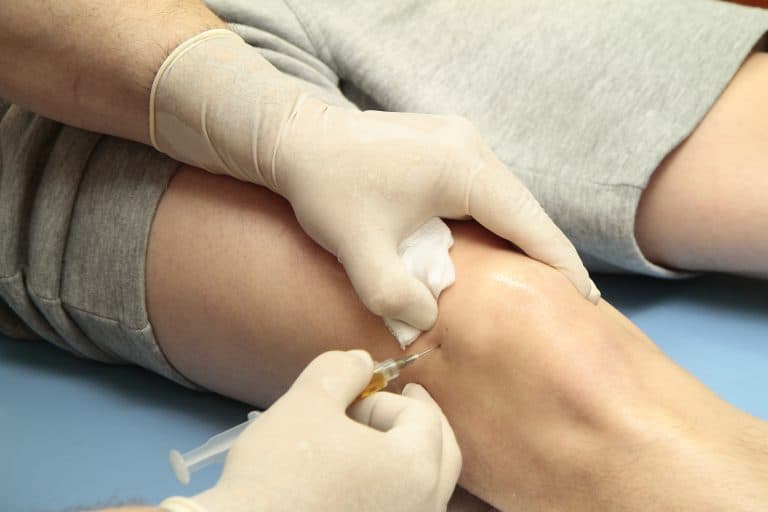



What is Cartilage Gel Treatment and Who Might Benefit?
Cartilage gel treatments typically involve injecting hyaluronic acid-based gels or using procedures like Autologous Matrix-Induced Chondrogenesis (AMIC). These methods use biocompatible gels or scaffolds that activate the body’s own cartilage cells, helping to grow new cartilage in damaged joints. The benefit is a less invasive approach, often with quicker recoveries.
One study describes how these gels “form a protective layer around the cartilage defect while stimulating the growth of chondrocytes and the consequent induction of cartilage regeneration” (Corain et al., 2023).
These therapies can be applied to various joint problems, most commonly “cartilage gel for knee injuries” involving cartilage tears or defects from injury or wear. However, suitability isn’t limited to the knee: treatments are also available for joints like the ankle, hip, and even the base of the thumb. Specifically, research shows that patients receiving cartilage gel injections for hand joint issues experienced “an improvement in pain symptoms, associated with an increase in force in the pincer and grip movements” (Corain et al., 2023). Another clinical trial focusing on the knee found the ChondroFiller liquid “to be a safe and simple workable method,” with MRI scans showing “good immediate filling of all treated defects” (Schneider, 2016). In the hip, injectable materials have also “emerged as an adjunctive modality to improve clinical outcomes for focal cartilage defects” (Perez-Carro et al., 2021).
Key Criteria for Cartilage Gel Treatment Candidacy
Determining who can get cartilage repair gel starts with assessing the type of cartilage injury. These treatments work best for focal defects — small, clearly defined areas of cartilage damage — rather than widespread cartilage loss seen in advanced osteoarthritis. The size of the lesion is important too, since gels are most effective for small to medium defects. Joint location also matters. The knee and ankle are the most common sites for treatment, but hips and thumbs are increasingly included.
According to studies, ChondroFiller treatment has been successfully used “to treat defined small and medium sized cartilage defects of the knee joint” (Schneider, 2016). For hip joints, there’s also evidence supporting “the use of ChondroFiller liquid, a liquid cell-free collagen matrix, for symptomatic full-thickness chondral defects in a 1-step arthroscopic procedure” (Perez-Carro et al., 2021).
Patient factors such as age, overall joint health, and medical history influence candidacy too. Generally, middle-aged patients with healthier joints and no major inflammation tend to be better candidates. Prior injuries, surgeries or chronic joint diseases must be considered carefully.
Lifestyle plays a role as well. People who maintain an active lifestyle and are willing to commit to rehabilitation exercises after treatment are more likely to succeed. Those unable to engage in rehab may need different approaches. Importantly, studies stress that "despite advancing technology, physical examination and clinical history remain essential and cost-effective tools" to select candidates (Corain et al., 2023).
Exclusion Criteria and Comparative Suitability
There are certain conditions that rule out cartilage gel treatments. Advanced osteoarthritis, where cartilage damage is extensive and irreversible, generally excludes patients from receiving these gels. Other exclusion factors include systemic health issues that could impair healing, or joint instability which complicates treatment outcomes.
Different cartilage gel therapies suit different needs. Injectable hydrogels typically address smaller defects and are minimally invasive, resulting in easier recovery. The AMIC procedure involves adding a biological scaffold to stimulate cell growth and is suited for larger or more complex lesions needing stronger support. It’s important to understand that “more research with larger patient groups and longer follow-ups is needed to determine the full role of these new treatments” (Schneider, 2016).
Technical challenges ought to be considered as well. For instance, in hip treatments, “accessibility is not always easy, and sometimes the distance between the needle tip and the defect complicates the efficient delivery of the product” (Perez-Carro et al., 2021). Such practical factors can also shape eligibility.
Free non-medical discussion
Not sure what to do next?
Information only · No medical advice or diagnosis.
Expert Guidance and Clinic Support
Professor Paul Lee is a leading figure in orthopaedics and rehabilitation, with a wealth of experience in cartilage repair treatments. He serves as a Regional Surgical Ambassador and advisor to the Royal College of Surgeons of Edinburgh — roles highlighting his commitment to advancing patient care and clinical excellence.
At the London Cartilage Clinic, a multidisciplinary team offers expert, personalised assessments. This collaborative approach ensures patients receive thorough evaluations and clear guidance on whether cartilage gel therapy is right for them, making it a trusted centre for cartilage treatment decisions.

Frequently Asked Questions and Patient Decision Tools
Many people wonder, “Who can get cartilage repair gel?” and “What affects my suitability?” Common questions focus on eligibility, what to expect during and after treatment, and recovery times. Clear, patient-friendly answers help make this information easier to understand.
To help patients evaluate their potential candidacy, simple checklists or decision trees may be used. These tools consider key factors such as age, lesion size, joint health and activity level. However, it’s crucial to remember that these are only guides — a full evaluation by a qualified healthcare professional is essential for an accurate assessment.
Conclusion and Disclaimer
If you are thinking about cartilage gel treatment, it’s important to consult a qualified specialist who can assess your suitability and offer personalised recommendations. This ensures you receive safe, effective care tailored to your unique needs and lifestyle.
For individual medical advice, please consult a qualified healthcare professional.
References
- Corain, M., Zanotti, F., Giardini, M., Gasperotti, L., Invernizzi, E., Biasi, V., & Lavagnolo, U. (2023). The use of an acellular collagen matrix ChondroFiller® liquid for trapeziometacarpal osteoarthritis. Cartilage. https://doi.org/10.1177/19476035251354926
- Schneider, U. (2016). Controlled, randomized multicenter study to compare compatibility and safety of ChondroFiller liquid (cell free 2-component collagen gel) with microfracturing of patients with focal cartilage defects of the knee joint. Journal of Case Reports and Studies. https://doi.org/10.5348/VNP05-2016-1-OA-1
- Perez-Carro, L., Rosi Mendoza Alejo, P., Gutierrez Castanedo, G., Menendez Solana, G., Fernandez Divar, J. A., Galindo Rubin, P., & Alfonso Fernandez, A. (2021). Hip chondral defects: Arthroscopic treatment with the needle and curette technique and ChondroFiller. Arthroscopy Techniques. https://doi.org/10.1016/j.eats.2021.03.011
Frequently Asked Questions
- The London Cartilage Clinic offers advanced, multidisciplinary care led by Professor Paul Lee, a distinguished cartilage expert and Royal College of Surgeons of Edinburgh ambassador, ensuring thorough, personalised assessments and guidance for those considering innovative cartilage gel therapies.
- Cartilage gel treatments benefit patients with focal cartilage defects, often in the knee or ankle. Professor Paul Lee uses detailed clinical assessments, drawing upon his expertise, to match therapies to each patient’s needs and joint health, ensuring optimal care.
- Professor Paul Lee brings extensive experience in cartilage repair, holding prestigious surgical ambassador and advisory roles at the Royal College of Surgeons of Edinburgh, providing patients at the London Cartilage Clinic with expert, evidence-based approaches and compassionate guidance throughout the treatment process.
- Cartilage gel treatments are usually not recommended for advanced osteoarthritis or widespread joint damage. Professor Paul Lee conducts comprehensive evaluations to determine each patient’s suitability, prioritising safety and the most effective therapeutic approach for every individual.
- At the London Cartilage Clinic, a dedicated multidisciplinary team collaborates under Professor Paul Lee’s leadership, offering patients personalised care, clear communication, and comprehensive follow-up support, ensuring all aspects of their cartilage gel therapy are thoroughly addressed and managed.
Legal & Medical Disclaimer
This article is written by an independent contributor and reflects their own views and experience, not necessarily those of London Cartilage Clinic. It is provided for general information and education only and does not constitute medical advice, diagnosis, or treatment.
Always seek personalised advice from a qualified healthcare professional before making decisions about your health. London Cartilage Clinic accepts no responsibility for errors, omissions, third-party content, or any loss, damage, or injury arising from reliance on this material.
If you believe this article contains inaccurate or infringing content, please contact us at [email protected].
London Cartilage Clinic
Modern treatments, designed for lasting knee outcomes
Every treatment plan is selected to help you return to the quality of life you deserve. Our team combines up-to-date techniques with consultant-led decision making across cartilage repair, regeneration and replacement.
What your journey can look like
Step 01
Consultant-Led Assessment
Symptoms, imaging and goals reviewed in one structured appointment.
Step 02
Personalised Treatment Plan
A clear route chosen from repair, regeneration or replacement options.
Step 03
Precision Delivery
Modern techniques and specialist equipment matched to your diagnosis.
Step 04
Long-Term Knee Health
Follow-up guidance focused on durable function and quality of life.
Will the Arthrosamid work for me
PAAG-8+ Questionnaire
A bright, structured entry point for patients exploring Arthrosamid. The questionnaire helps frame suitability, expectations, and 24-month clinical benefit discussion before a fuller consultant-led review.
Designed for shared decision-making. It does not replace specialist consultation, examination, imaging review, or formal medical advice.